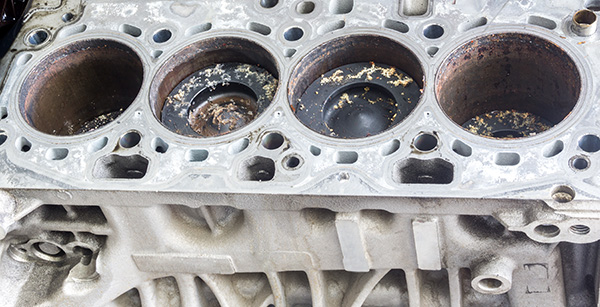
Direct injection helped European manufacturers build engines that make strong power while using less fuel, especially when paired with turbochargers. It also changed where gasoline enters the engine. Instead of spraying fuel into the intake port, the injector sends it directly into the combustion chamber.
That design works well, but it removes one benefit older port-injected engines had. Fuel no longer passes across the back of the intake valves, so oily vapor and combustion residue can collect there over time. On some European engines, that buildup becomes thick enough to affect airflow and engine performance.
Direct Injection Does Not Wash the Intake Valves
With port fuel injection, gasoline is sprayed upstream of the intake valve. Each time the engine runs, that fuel helps rinse away some of the oily film and deposits forming on the valve.
A direct-injection injector sits farther downstream and sprays into the cylinder after the intake air has already passed the valve. The intake valve still sees crankcase vapors and other contaminants, but it no longer gets that regular fuel wash. Over tens of thousands of miles, deposits can gradually build on the valve stem and the back of the valve head.
Crankcase Vapors Bring Oil Mist Into the Intake
Engines produce a small amount of pressure and vapor inside the crankcase as they run. The PCV system routes those vapors back into the intake so they can be burned instead of released into the atmosphere.
Those vapors contain a fine oil mist. When that oil reaches the cooler surfaces around the intake valves, some of it sticks. Repeated heat cycles bake the film into harder deposits. At our shop, we also check PCV operation when buildup seems unusually heavy because a failed separator or ventilation valve can allow far more oil into the intake than the engine should normally see.
Turbocharged Engines Can Add More Oil Vapor
Many European direct-injection engines are turbocharged, and turbo systems introduce additional places where small amounts of oil can enter the intake tract. Oil vapor can travel through the crankcase ventilation system, and worn turbocharger seals can add more under certain conditions.
A light oily coating inside charge pipes doesn't automatically mean a failed turbo. Heavy oil accumulation is different. If an engine has carbon buildup along with rising oil consumption, smoke, or large amounts of oil in the intake, we want to understand where that oil is coming from rather than treating the deposits as an isolated problem.
Short Trips Can Encourage Deposit Formation
Engines that make frequent short trips spend more time warming up and less time at steady operating temperature. Moisture and vapors have fewer opportunities to burn off, and the engine goes through more cold-start enrichment cycles.
City driving also means more idling and low-speed operation. None of this guarantees carbon buildup, but it can contribute to conditions where deposits accumulate faster. Regular maintenance helps keep the PCV system, ignition system, and engine oil in better condition, even though an oil change by itself cannot clean carbon from the intake valves.
What Carbon Buildup Feels Like From the Driver's Seat
Light deposits may not create any noticeable problem. Once airflow around the valves becomes restricted or uneven, the engine can start behaving differently.
Common symptoms include:
- Rough idle, especially after startup
- Hesitation when accelerating
- Misfires on one or more cylinders
- Reduced power
- Uneven throttle response
- A check engine light
- Harder starting
- Fuel economy that has gradually worsened
Those symptoms can also come from ignition coils, spark plugs, fuel injectors, vacuum leaks, or other engine problems. Confirm carbon buildup rather than assume it simply because the vehicle uses direct injection.
Some Cylinders Can Build More Deposits Than Others
Carbon buildup isn't always evenly distributed across every intake valve. Airflow patterns, PCV routing, intake manifold design, and temperature differences can leave one cylinder with heavier deposits than another.
That can cause a misfire that keeps returning on the same cylinder even after you've checked the plugs or coils. During an inspection, a borescope can show whether one area is significantly more restricted than the rest. That visual evidence is much more useful than replacing parts based only on a misfire code.
Why Fuel Additives Usually Do Not Clean These Deposits
Fuel-system cleaners can help with some injector or combustion-chamber deposits, but they don't reach the intake valves on a direct-injection-only engine.
That is the important distinction. Pouring cleaner into the fuel tank doesn't put the chemical where the intake-valve deposits are. Some engines use both port and direct injection, which changes the situation. Still, on a direct-injection-only setup, heavy valve deposits usually require a cleaning method that reaches the intake side directly.
Mechanical Cleaning Can Restore Airflow
When deposits become severe enough to affect performance, mechanics often remove the intake manifold so they can clean the valves directly. One well-known method uses crushed walnut shell media blasted at the closed valves while a vacuum removes the loosened material.
Other engines or situations may call for different cleaning methods. The key is keeping debris out of the cylinders and confirming that the valves are properly closed during the work. Once the deposits are removed, airflow can return much closer to normal, provided no other mechanical or PCV issue is contributing to the symptoms.
Get European Intake Valve Cleaning In Virginia Beach, VA, With European Autowerks
If your European vehicle has developed rough idle, recurring misfires, hesitation, or reduced performance, European Autowerks in Virginia Beach, VA, can check for intake-valve deposits and the conditions that may be contributing to them.
Schedule an engine inspection if carbon buildup affects how your direct-injection engine runs.